


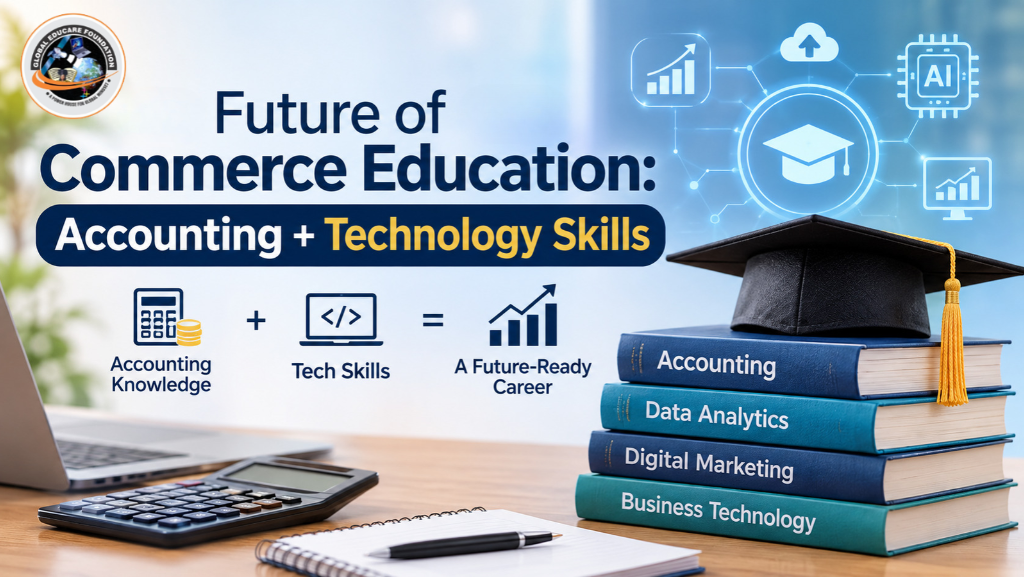
Commerce education is evolving with changes in the business world. Traditionally, commerce students focused on subjects such as accounting, economics, taxation, finance and business management. While these subjects remain essential, today’s employers also expect graduates to understand technology and use digital tools in everyday business operations.
With businesses increasingly adopting automation, online accounting systems and data-driven decision-making, students must develop a combination of accounting knowledge and technology skills. This shift is shaping the future of commerce education and creating new opportunities for students pursuing a B. Com degree.
Why Is Commerce Education Changing?
Business financial management practices have evolved considerably over the years. Many organisations now use digital platforms for maintaining accounts, preparing financial reports, managing payroll and filing taxes.
Traditional bookkeeping methods are gradually being supported by accounting software and automated systems. As a result, commerce graduates need more than theoretical knowledge. They must understand how financial concepts are applied in real business situations.
Modern commerce education aims to prepare students for these changes by combining classroom learning with practical exposure, digital awareness and problem-solving abilities.
Accounting Skills Remain the Foundation
Accounting continues to be one of the most important areas of commerce education. Every business, regardless of its size or industry, needs accurate financial records and proper financial management.
Students pursuing commerce should develop a strong understanding of:
- Financial accounting and bookkeeping
- Cost and management accounting
- Taxation and GST fundamentals
- Financial statements and reporting
- Auditing and business finance
- Budgeting and financial planning
These concepts help students understand how businesses operate financially. A clear foundation in accounting also makes it easier to learn advanced financial tools and technologies.
Technology Skills Every Commerce Student Should Learn
Technology is becoming an essential part of accounting and business management. Students who develop digital skills alongside their academic knowledge can improve their professional readiness.
Some important technology skills include:
1. Accounting Software
Knowledge of accounting software such as Tally and other digital accounting platforms helps students understand how businesses maintain financial records, manage transactions and generate reports.
2. Advanced Excel
Microsoft Excel is widely used for financial calculations, data organisation, budgeting and reporting. Learning formulas, pivot tables and data analysis techniques can help commerce students handle financial information more efficiently.
3. GST and Digital Taxation
Businesses increasingly depend on digital platforms for GST-related activities, tax calculations and compliance. Understanding these processes gives students useful practical knowledge.
4. Data Analysis
Financial data helps businesses make informed decisions. Students who understand basic data analysis can identify trends, compare financial performance and prepare meaningful reports.
5. Digital Banking and Financial Technology
Online banking, digital payments and financial technology platforms have changed how businesses handle transactions. Awareness of these systems helps students understand modern financial operations.
Career Opportunities for Commerce Graduates
The combination of accounting and technology skills can open doors to several career opportunities. Commerce graduates can explore roles across different industries depending on their interests, qualifications and additional training.
Some career options include:
- Accountant
- Accounts Executive
- Taxation Assistant
- Financial Analyst
- Banking Professional
- Audit Assistant
- Payroll Executive
- Business Operations Executive
Students can also pursue professional qualifications such as CA, CMA, CS or other specialised courses to develop expertise in their chosen fields.
How Students Can Prepare for the Future of Commerce
Building a successful career in commerce requires consistent learning and practical exposure. Students should focus on understanding concepts rather than simply memorising them.
Participating in practical assignments, working with accounting software, improving communication skills and staying updated with business trends can make a difference.
Choosing a college that provides a strong academic foundation and encourages the development of practical skills is equally important. Students should look for an educational environment that supports both subject knowledge and overall professional development.
Conclusion
The future of commerce education depends on combining traditional accounting knowledge with modern technology skills. Students who understand financial concepts and are comfortable using digital tools will be better prepared to adapt to changing business requirements and explore diverse career opportunities.
For students looking for quality Commerce Colleges in Hubli, choosing the right institution is an important step towards building a strong professional foundation. Global College of Management, IT & Commerce provides opportunities for students to pursue commerce education through its B. Com programme. Those searching for the Best B. Com College in Hubli can explore the academic programmes and learning opportunities offered at Global College of Management, IT & Commerce to take their first step towards a promising future in commerce.
Recent Posts
-
Future of Commerce Education: Accounting + Technology Skills
-
Top IT Skills Students Should Learn During Their BCA Course
-
How to Build a Portfolio Using College Projects, Certifications and Practical Assignments
-
Why Industry-Oriented BBA Programs Are Becoming Popular Among Students
-
Why B.Com is Still One of the Most Preferred Degree Courses After 12th